


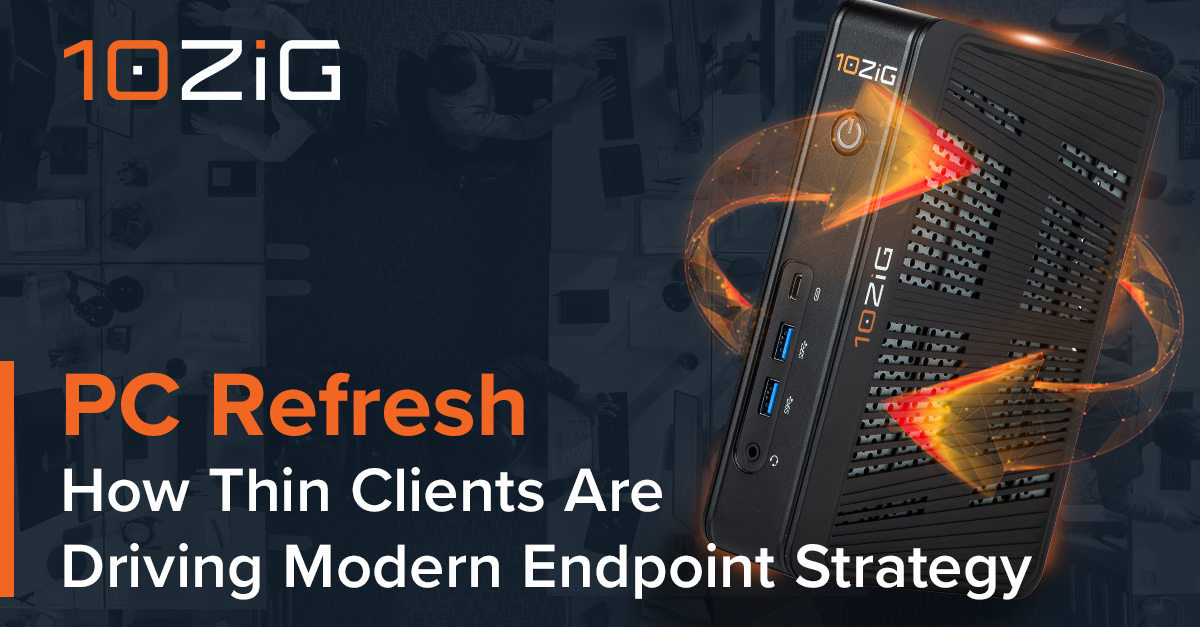
The traditional PC refresh cycle is breaking down. For decades, organizations replaced desktops every three to five years, assuming predictable component pricing, stable supply chains, and consistent OS requirements. That world is gone. Volatile memory markets, rising hardware costs, and increasingly complex security requirements have forced IT leaders to rethink how they purchase, manage, and refresh endpoints.
Across industries, thin clients are emerging not as legacy devices but as the strategic answer: modern, purpose‑built endpoints that correspond with today’s VDI, DaaS, and cloud workspace realities. For organizations planning to modernize without going over budget, thin clients are entirely changing the PC refresh conversation.
Why the PC Refresh Model Is Under Pressure
Recent analysis shows memory pricing has increased by up to 60% year-over-year, driven by AI investment and hyperscaler demand. Even modest laptop configurations now carry inflated price tags without delivering proportional value for task workers or knowledge workers.
Hardware challenges are compounding. Device availability remains inconsistent, NAND and DRAM supply continues to fluctuate, modern operating systems and security tools demand increasingly heavy local resources, and rising compliance requirements add new layers of complexity to endpoint configuration and management.
This volatility has turned the refresh cycle from a routine procurement event into a risk management decision. As TCD notes, endpoint resilience now depends on reducing dependence on volatile hardware markets and intelligently extending the lifecycle.
Thin Clients Change the Economics of Endpoint Strategy
A modern thin client is an endpoint designed for a world where most workloads run centrally. When desktops, apps, and data are accessed through VDI, DaaS, or secure browser sessions, the endpoint’s role shifts from “compute device” to “secure access appliance.”
According to Enterprise VDI & EUC, modern thin clients provide a streamlined operating system layer that removes unnecessary local components, resulting in a minimal attack surface and significantly reduced security exposure. Their centralized management model allows IT teams to configure, update, and control endpoints from a single console, guaranteeing consistency throughout distributed environments. Thin clients also deliver predictable, reliable performance because they are purpose‑built to access virtual desktops and cloud workspaces rather than run heavy local workloads. Combined with longer hardware lifecycles, these attributes make thin clients a stable, efficient, and cost‑effective foundation for today’s endpoint strategies.
The New PC Refresh Strategy: Replace Strategically, Repurpose Selectively
An Interzero and Fraunhofer UNSICHT study shows a major shift: organizations are no longer refreshing endpoints wholesale. Instead, they’re combining net‑new thin clients with the selective repurposing of newer PCs that still have usable life.
This mixed approach delivers:
1. Cost Control
Thin clients avoid overbuying memory and storage that local workloads no longer require. They also sidestep volatile component pricing that exacerbates with size and scale.
2. Lifecycle Extension
Repurposing PCs into thin clients can extend device life by 3–5 years. This additional life can extend the budget and leave room for other necessary upgrades.
3. Centralized Governance
Thin client OS layers and management platforms, such as 10ZiG Manager, eliminate the need for on‑site visits, reduce configuration drift, and standardize configurations across widespread environments.
4. Security Hardening
A hardened, locked-down thin-client OS dramatically reduces ransomware risk and eliminates local data exposure. This is a key advantage highlighted in Distilogix’s endpoint OS analysis.
Why Thin Clients Fit Today’s Hybrid Workspace Reality
Modern endpoint strategy must support:
- VDI (Citrix, Omnissa, Parallels)
- Cloud desktops (Azure Virtual Desktop, Windows 365, Amazon WorkSpaces)
- SaaS and browser‑delivered applications
- Hybrid workforces
- Distributed branch environments
Thin clients are uniquely suited for this because they are platform‑agnostic and identity‑driven. They connect to multiple workspace types without requiring local compute or heavy OS layers.
TCD’s thin-client software platform analysis reinforces this: centralized governance, secure OS layers, and workflow repurposing create a unified endpoint strategy that reduces risk and modernizes operations without hardware lock‑in.
This is precisely where 10ZiG excels: delivering purpose‑built hardware, hardened OS options, and management tools that support multi‑platform EUC environments.
Security: The Most Important Reason Thin Clients Are Winning
Endpoint security has become the defining factor in refresh decisions. A Windows laptop carrying sensitive session data into a coffee shop is a liability; a locked‑down thin client with no local data is a physical barrier to ransomware.
Thin clients naturally reinforce Zero Trust principles by eliminating local data, which removes one of the most common points of compromise on traditional PCs. Their minimal attack surface further lowers exposure by limiting what can run on the device and how it can be accessed. Identity‑based access underpins every session, making sure users authenticate before accessing any application or resource. Because thin clients standardize OS behavior throughout all endpoints, IT teams can enforce consistent security controls without worrying about drift or unmanaged configurations. Centralized patching and policy management complete the model, enabling organizations to maintain a continuously updated, tightly governed endpoint fleet aligned with modern Zero Trust requirements.
For regulated industries such as healthcare, finance, and government, this is no longer optional.
Sustainability: The Emerging Driver of Endpoint Modernization
Thin clients naturally support green targets by extending hardware lifecycles from 7 to 10 years in many deployments, considerably reducing the frequency of device replacement and the ecological impact linked with manufacturing new PCs. Their lower power consumption contributes to considerable energy savings across large fleets, while reducing the number of physical components and moving parts helps minimize e‑waste over time. Organizations can also repurpose existing PCs as thin clients, further extending the devices’ usefulness and preventing hardware from entering the waste stream prematurely.
As organizations face pressure to report on environmental impact, thin clients become a strategic lever for reducing their carbon emissions and extending hardware lifecycles.
The Bottom Line: Thin Clients Are Redefining Endpoint Strategy
The PC refresh cycle is no longer a predictable, calendar‑driven hardware swap. It has evolved into a deliberate exercise focused on reducing dependence on volatile component markets, strengthening the security posture, supporting hybrid work, and enabling multi‑platform EUC environments. Organizations are focusing on lifecycle extension through repurposing, lowering costs without sacrificing performance, and aligning endpoint decisions with sustainability mandates. The conversation about refresh has shifted from “What new PC should we buy?” to “How do we modernize intelligently, securely, and efficiently?”
Thin clients, especially purpose‑built products like 10ZiG, have become the foundation of this new endpoint strategy. They deliver predictable performance, central control, and long‑term flexibility at a time when traditional PCs introduce cost instability and security risk. For organizations planning their 2026–2027 refresh, thin clients aren’t just an alternative; they’re the strategic route forward.
Connect with 10ZiG and discover what this could look like for you.